

Canada Gets Past Norway
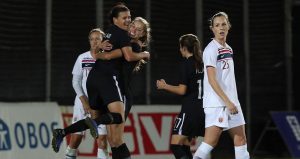
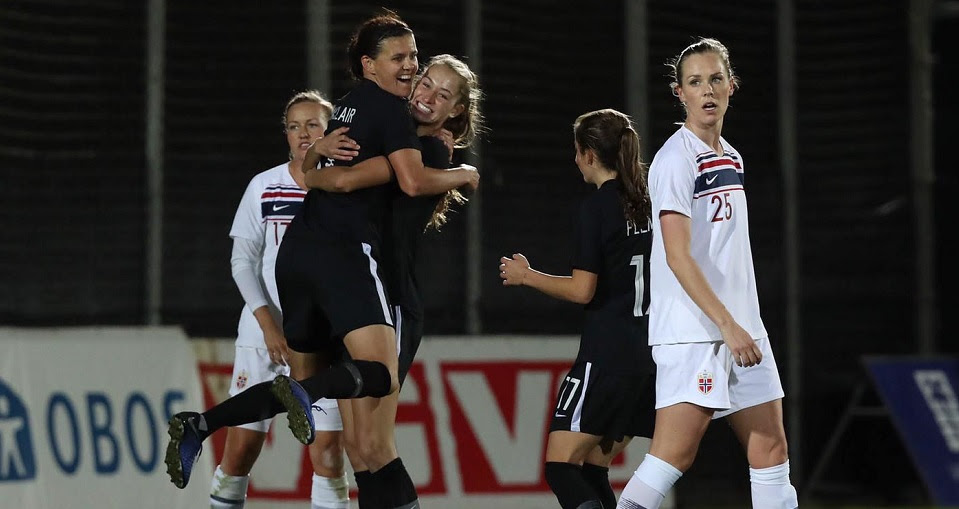
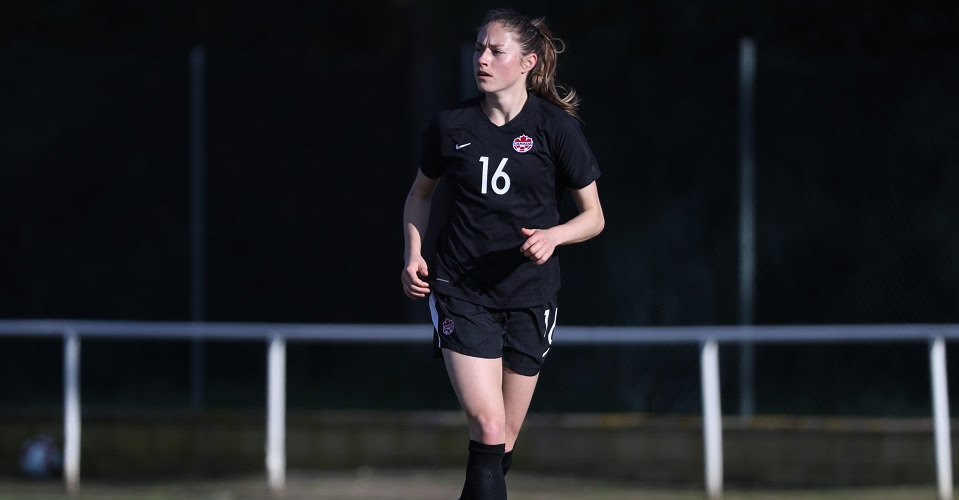
Canada opened 2019 with a 1:0 win over Norway in its first official match of the FIFA Women’s World...




 Currently I’m employed as a one of club head coach, director of coaching or technical director (we’ve never really settled on a title so you choose) for a small club (about 175 players from Youth to Senior) in Eastern Ontario.
The challenges are the same every small club (and some big ones) faces – training numbers, competitive balance against bigger clubs, facilities (we have no option other than gyms for winter training), and most importantly making sure our players develop a life long love and desire to play.
We’ve tried the usual things and this year thanks to an understanding board that’s willing to take chances we are trying something a little unusual as well.
The program that has hit the back of the net is our “Street Futsal League” which has sold out two time slots involving 32 players in a once weekly night of play. The play is high tempo especially in the younger group, has seen some incredible display of skill by both male and female players (both groups are coed) and the players are having a blast.
The thing is the “Street Futsal League” isn’t played on the street, is mostly, sorta, played by futsal rules and definitely isn’t a league – at least not in the traditional sense. There is little almost no coaching, no officials, no goalkeepers and until a couple of weeks ago no “real” goals.
At this point most soccer people I talk to about the program walk away muttering something like “crazy, mad man, what the”…. well to be honest that happens a lot when I have conversations with soccer people.
The “Street Futsal League” was a response to lessened interest in pure winter training (we still run a training night earlier in the week for the same groups)and my desire to get the core players a second night with the ball in the winter. Based on the Dutch 4v4 tournament that was first outlined to me by Jan Derks twenty years ago at a summer camp at Colgate University the program is easy to organize, facilitate and the benefits are obvious. (Here is an excellent hand out to help – PDF)
Basically teams are randomly chosen with players being assigned to A, B, C or D – A always plays B and C always plays D (this is for 16 players) and after the first round of games is complete players are again randomly assigned to the four teams and play again. The basic field set up is 20 X 40 with two small goals. In Jan’s version points were awarded individually to members of the team based on 10 points for a win, 5 for a tie and 0 for a loss plus a bonus point for every goal. So for example if A beat B 5-3 every player on Team A would receive 15 points and players on Team B would receive 3 etc. Outdoors all games were played at the same time so you can quickly get 5 or 6 games played in a normal session.
Indoors in a gym we’ve modified things. Players still assigned to teams randomly. Our points system is 5 for a win, 3 for a tie, 1 for a loss and a bonus point for each goal up to a maximum of five. Our games consist of 2 – four minute halves. A plays B for four minutes get a half time score and then C plays D again for four minutes water leak detection san diego. Then we repeat the process for the “second” half to get our final score for the first game. Players are then reassigned teams and we repeat the process twice to get three games into a 75 minute time block.
One other modification is our goals, at least for the first four sessions were benches turned on their side – I wanted to emphasize shooting low without really making it a condition. It’s traditionally the way we’ve scrimmaged indoors in any case for the past two years so it really wasn’t an adjustment. In week five we added 4 x 4 foot goals (with mesh and everything! It was very exciting!!) without much change to the number of goals scored.
We have two other simple rules – you must be over half to score and on a goal or a goal kick you must back off to our retreat line and allow the team to play one pass.
The only coaching is occasional encouragement from the bench by myself and at half time I will speak in very general terms about shape and individual areas to the two groups waiting to get back on the floor. I’ve actually made a concious effort to say as little as possible.
At the end of each night I announce who had the top five scores (just the names not the numbers) in no particular order and later in the week we post them on the clubs Facebook page (first names only and no actual score). Internally I track all the scores week to week and keep both a score to date and average weekly score for each individual – this will never go beyond myself and the coaching staff but is enlightening.
The result of all this – near 100% (92 to be exact) participation rate, plenty of goals (well over 7 per game on average), plenty of drama (about 30% of games decided by two goals or less) and overwhelmingly plenty of kids smiling and enjoying themselves.
Some times the best thing to do is get out of the way.